Upgrade Your Comfort: A Complete Guide to Heat Pump Replacement in Minneapolis
Your complete guide to heat pump replacement in Minneapolis from Stafford Heating, Cooling, Plumbing & Electrical with helpful insights for confident home decisions. Learn more!
Why Minneapolis Homeowners Are Upgrading to Modern Heat Pumps
Heat pump replacement Minneapolis MN is becoming a top priority for homeowners facing aging systems, rising energy bills, and inconsistent comfort during Minnesota's extreme seasonal swings. Whether your current heat pump struggles to keep up with winter cold or summer heat, or it's simply nearing the end of its 15-year lifespan, upgrading to a modern, cold-climate heat pump can dramatically improve your home's comfort while reducing your monthly utility costs. Today's advanced systems are specifically designed to handle Minnesota's harsh winters, operating efficiently even when temperatures drop well below freezing.
Quick Answer: When to Replace Your Heat Pump
- Age: System is 10-15+ years old
- Performance: Frequent breakdowns or inconsistent heating/cooling
- Costs: Rising energy bills or repair costs exceeding 50% of replacement
- Comfort: Uneven temperatures or inadequate heating in winter
- Technology: Older systems lack modern efficiency and smart features
If you're experiencing any of these issues, learn more about heat pump services in Minneapolis or contact our team for a free consultation on your replacement options.
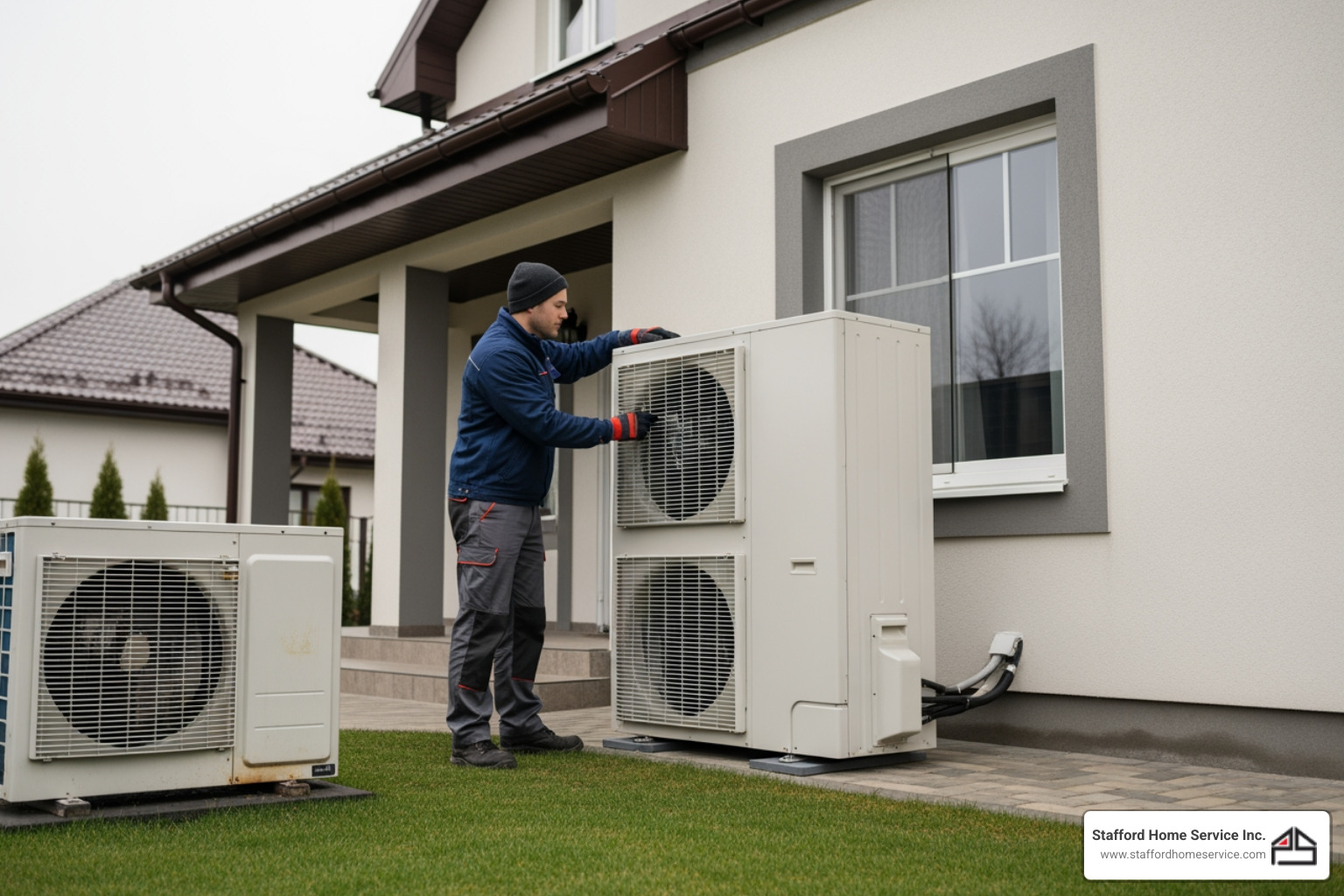
Why Upgrade Your Minneapolis Home with a New Heat Pump?
If your heat pump is showing its age, you're probably noticing the impact on your comfort and your wallet. A heat pump replacement Minneapolis MN isn't just about swapping out old equipment—it's about changing how your home feels every single day of the year.
Modern heat pumps deliver something older systems simply can't match: consistent, reliable comfort no matter what Minnesota's weather decides to do. You'll notice the difference immediately—no more chilly spots in winter, no more rooms that feel like saunas in summer. New systems respond faster and maintain temperatures more precisely, giving you true climate control throughout your entire home.
The energy savings alone make replacement worth considering. Today's heat pumps work smarter, not harder. They move heat instead of generating it, which means they use far less energy than traditional heating systems. That efficiency shows up directly on your utility bills—month after month, year after year. Plus, you're doing something good for the environment by reducing your carbon footprint.
There's another benefit many homeowners overlook: indoor air quality. Modern heat pumps work beautifully with advanced filtration systems like our air cleaners, creating a healthier environment for your family. And if you're thinking about selling down the road, a new high-efficiency heat pump adds real value to your property—buyers in the Minneapolis area know quality when they see it.
Key Signs It's Time for a Replacement
How do you know when it's time to stop repairing and start replacing? Your heat pump usually gives you plenty of clues.
Age matters more than you might think. If your system has been running for 10-15 years or more, it's approaching the end of its natural lifespan. While some well-maintained units can push beyond 15 years, most systems in this age range start declining noticeably. The technology has also improved dramatically—what was efficient a decade ago simply can't compete with today's models.
Frequent repairs are your heat pump's way of telling you something. When you're calling for service multiple times a year, or when a single repair costs more than half what a new system would, you're throwing good money after bad. Those repair bills add up fast, and an unreliable system leaves you vulnerable during the worst weather.
Watch your utility bills closely. If they've been creeping upward despite similar usage patterns, your aging heat pump is struggling. It's working overtime to maintain comfortable temperatures, burning through energy and your hard-earned money in the process.
Inconsistent temperatures throughout your home signal real trouble. When your living room feels comfortable but your bedroom is freezing (or sweltering), your heat pump can't properly distribute conditioned air anymore. This often points to failing internal components that replacement solves completely.
Strange noises or odors shouldn't be ignored. Grinding, rattling, hissing, or banging sounds mean something inside is breaking down. Musty or burning smells can indicate serious mechanical or electrical problems. While some issues are repairable, these symptoms often mean major component failure is imminent.
Here's something important: if your system still uses R-22 refrigerant, replacement isn't just smart—it's practically necessary. This refrigerant was phased out years ago due to environmental concerns, making it expensive and increasingly difficult to find for repairs.
If any of these sound familiar, we can help you figure out the best path forward. Sometimes a repair makes sense, but often a heat pump replacement Minneapolis MN is the smarter investment. We also handle AC Repair when you need it.
The Advantages of a Modern System
The technology in today's heat pumps would have seemed like science fiction just ten years ago. The improvements aren't just incremental—they're transformative.
Energy efficiency has taken a giant leap forward. Modern systems boast dramatically higher SEER and HSPF ratings, meaning every dollar you spend on electricity goes further toward keeping your home comfortable. These aren't small improvements—we're talking about substantial reductions in your monthly operating costs compared to older systems or traditional furnaces.
The quiet operation of new heat pumps surprises almost everyone. Variable-speed models operate at whisper-quiet levels—some as low as 45 decibels, which is quieter than normal conversation. Remember how your old unit used to roar to life and disturb your peace? Those days are over.
Smart home compatibility brings your heating and cooling into the modern era. Today's heat pumps work seamlessly with smart thermostats, giving you precise control from anywhere. Adjust temperatures from your phone, set up custom schedules, monitor energy usage, and even create different zones throughout your home. It's convenience and efficiency working together.
And as we mentioned earlier, the improved indoor air quality can make a real difference in how your family feels. When your heat pump works with quality air filtration systems, you're breathing cleaner, healthier air every day.
Maximizing Lifespan and Performance
You're making a significant investment in your home's comfort, so naturally you want that investment to last. The average lifespan of a modern heat pump is around 15 years, though premium systems with excellent maintenance can reach 20 years or more.
The secret to longevity? Regular maintenance. It's really that simple. A heat pump that receives consistent professional care will outlast a neglected system by years, run more efficiently throughout its life, and cause you far fewer headaches.
Professional tune-ups should happen annually—think of them as your heat pump's yearly physical. During these visits, we thoroughly inspect every component, clean the coils, check refrigerant levels, calibrate sensors, and catch small issues before they become big problems. This preventative approach saves you money and extends your system's life significantly.
Between professional visits, you have one critical job: changing air filters. This simple task has an outsized impact on your system's performance and longevity. Dirty filters restrict airflow, forcing your heat pump to work harder and less efficiently. Check your filters monthly, especially during heavy heating and cooling seasons, and change them as needed.
Want to make maintenance even easier? Our service agreement takes the guesswork out of care. You'll get scheduled tune-ups, priority service when you need it, and peace of mind knowing your system is getting the attention it needs to reach that 15-year mark—and beyond.
Choosing the Right System for Minnesota's Climate
Finding the perfect heat pump for your Minneapolis home isn't just about picking a popular brand and hoping for the best. It's about understanding your home's unique needs and matching them with a system that can handle everything Minnesota's climate throws at it—from sweltering summer days to bone-chilling winter nights.
Our process always starts with a thorough home assessment. We look at factors you might not immediately think about: your home's insulation quality, the age and condition of your windows, your home's layout and square footage, and even environmental considerations like typical snow accumulation and where condensation might drip. This comprehensive evaluation helps us understand your specific heating and cooling demands and identify the ideal location for your new unit.
Proper sizing is absolutely critical—and it's not something you want to guess at. An oversized heat pump will short-cycle, turning on and off frequently, which wastes energy and creates uncomfortable temperature swings. An undersized unit will run constantly, struggling to keep up with demand, driving up your energy bills and wearing out components prematurely. That's why we perform precise sizing calculations based on your home's actual heating and cooling load.
We also carefully evaluate your existing ductwork. If you have ducts, a traditional ducted heat pump can work beautifully with your current HVAC infrastructure. However, sometimes modifications or upgrades are needed to maximize efficiency and airflow. For homes without existing ductwork, or if you're adding climate control to a specific area like a finished basement or garage, ductless systems offer an excellent alternative without the expense and disruption of installing new ducts.
Types of Heat Pumps Available
When you're considering a heat pump replacement Minneapolis MN, you'll encounter three main types of systems. Each has distinct advantages depending on your home's layout, your budget, and your long-term comfort goals.
Air-source heat pumps are the most common and typically the most affordable option. These systems extract heat from the outdoor air (even when it's cold) and transfer it inside during winter, then reverse the process in summer. Modern cold-climate air-source heat pumps have come a long way and can now operate efficiently even in Minnesota's harsh winters, down to around -13°F. They're relatively easy to install and work well with existing ductwork.
Ductless mini-split systems are perfect for homes without existing ductwork, room additions, or when you want independent temperature control in different areas of your home. These systems consist of an outdoor unit connected to one or more indoor air handlers mounted on walls or ceilings. They're incredibly efficient, quiet, and offer flexible zoning options. If you're interested in this approach, explore our Ductless Systems options.
Geothermal heat pumps (also called ground-source heat pumps) are the most efficient option available, using the stable temperature of the earth to heat and cool your home. While they require a higher upfront investment due to the need to install underground loops, they offer the lowest operating costs and can last 25+ years. They're virtually unaffected by outdoor air temperature, making them extremely reliable in Minnesota's climate extremes.
Key Factors for Your Heat Pump Replacement in Minneapolis MN
Once you've determined which type of heat pump makes sense for your home, there are several technical specifications and features to consider that will impact both your comfort and your long-term energy costs.
Efficiency ratings are your first clue to how well a system will perform. The SEER (Seasonal Energy Efficiency Ratio) measures cooling efficiency—look for ratings of 16 or higher for significant energy savings. The HSPF (Heating Seasonal Performance Factor) measures heating efficiency, and modern cold-climate heat pumps should have an HSPF of at least 9. Higher numbers mean greater efficiency and lower operating costs. You can estimate your potential savings with our SEER calculator.
System size, measured in tonnage, must match your home's heating and cooling load. This isn't about physical dimensions—it's about capacity. Most homes need between 2 and 5 tons, but this varies significantly based on square footage, insulation, window quality, and other factors. Our technicians use industry-standard Manual J calculations to determine the precise size your home needs.
Variable-speed technology is a feature worth prioritizing. Unlike older single-stage systems that are either fully on or fully off, variable-speed compressors can adjust their output to match your home's exact needs at any given moment. This means better temperature control, improved humidity management, quieter operation, and lower energy consumption. They run longer at lower speeds rather than cycling on and off, which is much more efficient.
Smart thermostat integration transforms your heat pump into a truly intelligent system. Modern thermostats learn your preferences, adjust automatically for optimal efficiency, and let you control your home's temperature from anywhere using your smartphone. They can even provide detailed energy usage reports and maintenance reminders. Check out our selection of advanced thermostats that pair perfectly with new heat pumps.
Understanding Local Rebates and Incentives
One of the most overlooked aspects of a heat pump replacement Minneapolis MN is the money available to help offset your investment. Between federal, state, and utility programs, you could save hundreds or even thousands of dollars on your new system.
Federal tax incentives for energy-efficient heat pumps can be substantial. Recent legislation has expanded these credits, allowing homeowners to claim a percentage of the installation cost on their federal tax return. These incentives are designed to encourage the adoption of high-efficiency systems that reduce overall energy consumption.
Utility rebates from your local electric or gas company can provide immediate savings. Many Minnesota utilities offer cash rebates for installing qualifying high-efficiency heat pumps, especially those that meet specific ENERGY STAR® criteria. These programs change periodically, so it's worth checking what's currently available.
Manufacturer promotions can also help reduce your upfront costs. Heat pump manufacturers frequently offer seasonal rebates, special financing terms, or bundled equipment discounts. We stay current on all available incentives and can help you steer the application process to maximize your savings. Visit our promotions page to see what's currently available.
The key is to explore all these options before making your final decision. The combination of federal, utility, and manufacturer incentives can significantly reduce your net cost, making a premium, high-efficiency system much more affordable than you might expect.
Customer Testimonials
Our customers consistently praise our knowledgeable technicians, prompt service, and the lasting quality of the work we deliver.