Plymouth's Rapid Response: Emergency Heating Replacement
When Your Furnace Quits in the Dead of Winter
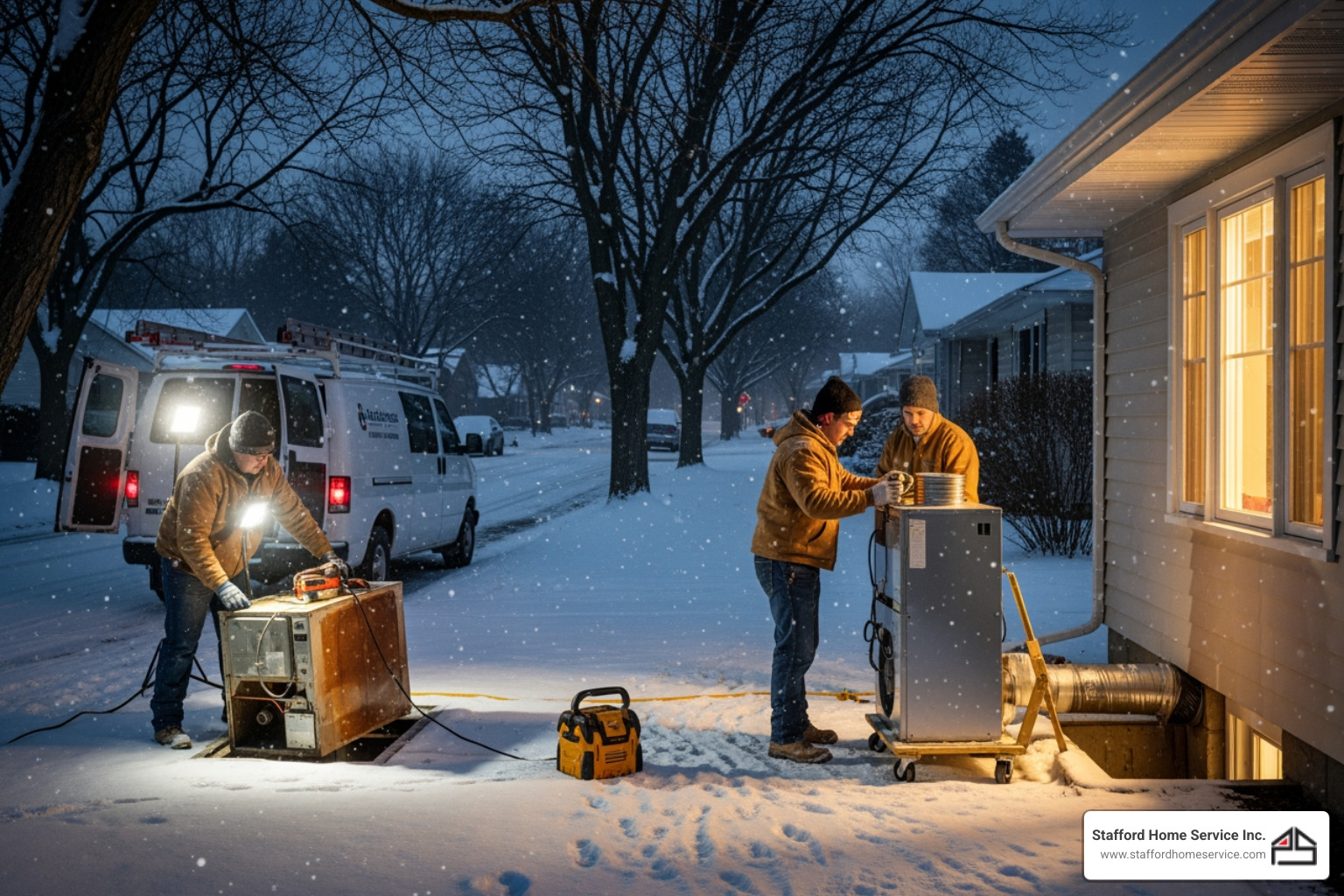
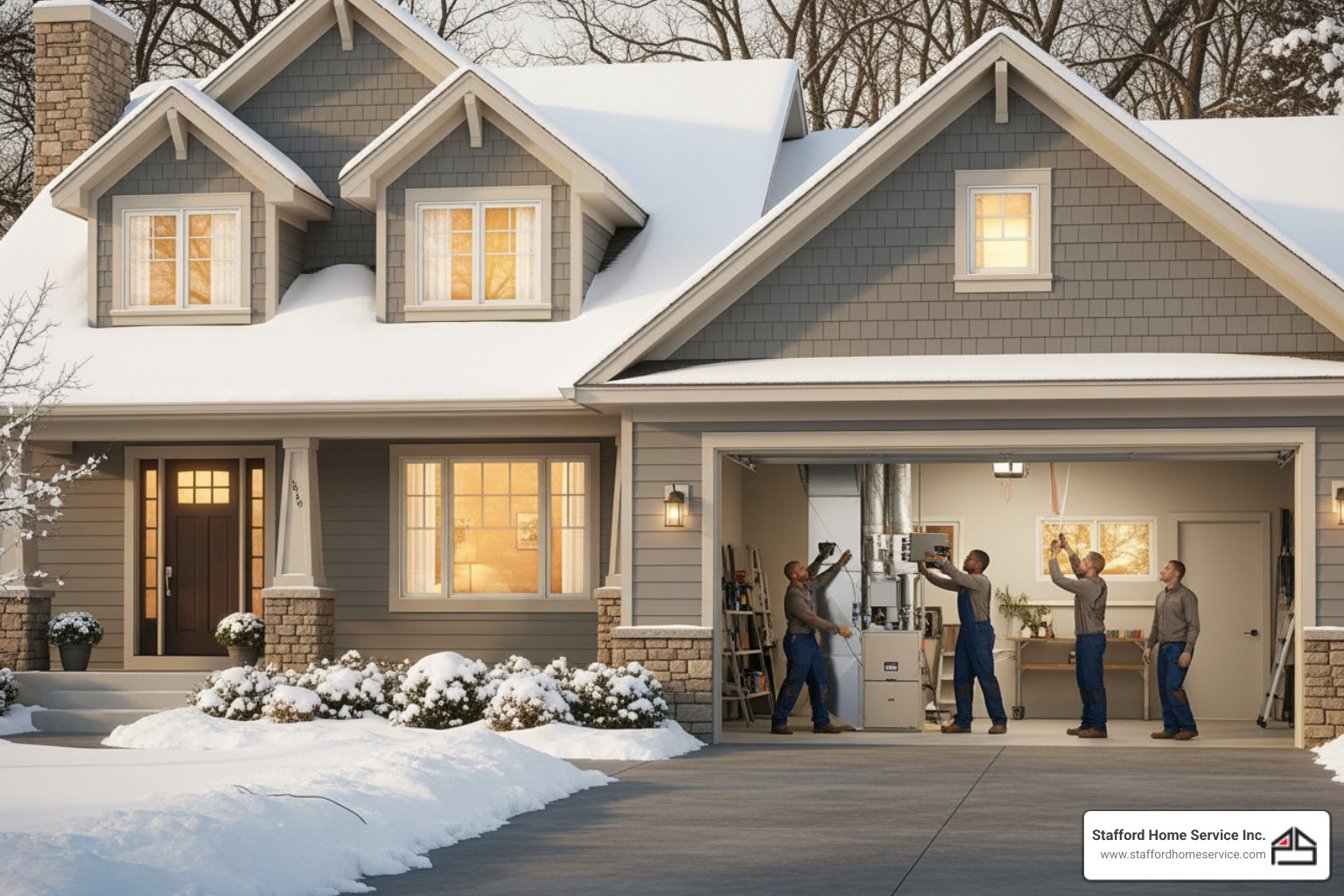
Emergency heating replacement in plymouth, mn is a critical service when your furnace fails during Minnesota's harsh winter months. When temperatures plummet to 3°F or below and your heating system stops working, knowing what to do next can protect your family, your home, and your pipes from freezing.
Immediate Steps When Your Furnace Fails:
- Check for gas leaks - If you smell gas, evacuate immediately and call your utility company
- Call a 24/7 HVAC service - Professional technicians can assess whether you need repair or replacement
- Use space heaters safely - Never leave them unattended, and keep them away from flammable materials
- Prevent frozen pipes - Let faucets drip slightly and open cabinet doors to allow warm air circulation
- Expect 8-12 hours for replacement - Once the new unit is on-site, professional installation typically takes most of a day
If you're experiencing heating issues, learn more about furnace installation and repair options or contact us for immediate emergency service.
Plymouth's winter conditions are unforgiving. Furnaces over 15 years old with major failures often need replacement rather than repair. Signs like a cracked heat exchanger, which can leak carbon monoxide, make replacement not just recommended but essential for your family's safety. When your furnace quits on a subzero night, you need fast, professional help to restore warmth to your home.
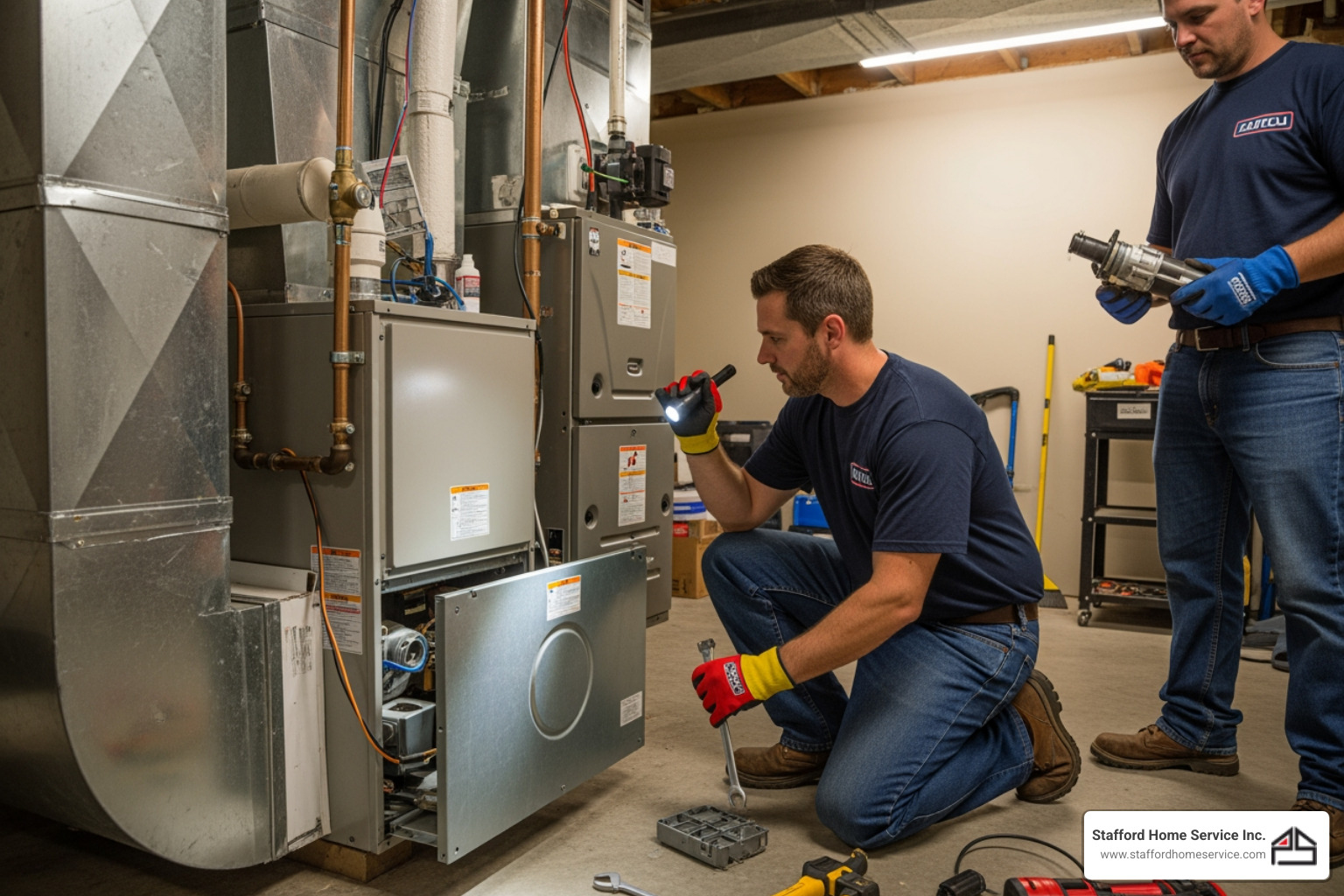
Is It a Repair or a Full Replacement? Key Warning Signs
Waking up to a cold home in Plymouth, especially during the bitter Minnesota winter, is more than just an inconvenience—it's a genuine emergency. The immediate question that comes to mind is often, "Can it be fixed, or do I need a whole new system?" Deciding between a repair and an emergency heating replacement is crucial, and it hinges on several key factors. We understand that this is a stressful situation, and we're here to help you make the best, most informed decision for your home and family.
Key Signs You Need an Emergency Heating Replacement in Plymouth, MN
Sometimes, a furnace will give you subtle clues before it completely gives up the ghost. Other times, it's a sudden, dramatic failure. Here are the critical indicators that suggest your furnace might be ready for an emergency replacement, rather than just a repair:
- Advanced Age: Most furnaces are designed to last between 15 to 20 years. If your furnace is over 15 years old and experiencing major failures, replacement is often the more economical and reliable choice. An older unit is more likely to break down again soon, leading to a cycle of costly repairs.
- Cracked Heat Exchanger: This is a critical safety hazard. A cracked heat exchanger can leak carbon monoxide—a colorless, odorless, and deadly gas—into your home's air supply. If a technician diagnoses a cracked heat exchanger, replacement is not just recommended, it's absolutely essential for your family's safety.
- Frequent Breakdowns and Costly Repairs: Are you calling for furnace repairs multiple times a season? If your furnace needs constant attention, you might be "throwing good money after bad," as the saying goes. The cumulative cost of frequent repairs on an aging unit can quickly approach the cost of a new, more reliable system.
- Rising Energy Bills: An older, inefficient furnace works harder to heat your home, consuming more fuel and driving up your utility bills. If your energy costs are steadily climbing without a significant change in usage, it's a strong sign that your furnace is losing its efficiency and could be a candidate for replacement.
- Loud and Unusual Noises: While some furnace noises are normal, loud banging, grinding, squealing, or persistent rattling sounds often indicate severe mechanical failure. Components like the blower motor, fan, or other internal parts could be failing, signaling the end of your unit's functional life.
- Inconsistent Heating: If some rooms are warm while others remain cold, or if your furnace struggles to maintain a consistent temperature throughout your home, it could point to a failing system that can no longer distribute heat effectively.
- Visible Cracks or Rust: Beyond the heat exchanger, any visible cracks, corrosion, or excessive rust on the furnace's exterior or internal components can indicate structural integrity issues and potential safety risks.
- Yellow Pilot Light: A healthy pilot light should be blue. If yours is yellow or flickering, it could indicate incomplete combustion, which can produce carbon monoxide. This is a serious safety concern that warrants immediate professional assessment.
- Poor Indoor Air Quality: An old, struggling furnace might not filter air effectively, contributing to increased dust, allergens, or stale air in your home. Upgrading can significantly improve your indoor air quality. We also offer advanced solutions like air cleaners to ensure your home's air is as clean as possible.
Here's a quick comparison to help you weigh your options:
FactorRepair ScenarioReplacement ScenarioAge of FurnaceGenerally less than 10-12 years oldTypically over 15 years old, or at the end of its projected lifespanRepair CostLess than 30% of the cost of a new unitExceeds 30% of a new unit, or major component failure (e.g., heat exchanger)Safety IssuesNo immediate safety hazards (e.g., no carbon monoxide leaks, no gas leaks)Presence of critical safety hazards (e.g., cracked heat exchanger, gas leak)ReliabilityInfrequent breakdowns, system generally performs wellFrequent breakdowns, inconsistent heating, declining performanceEnergy BillsStable or predictable energy consumptionSteadily rising energy bills due to inefficiencyFuture OutlookLikely to provide several more years of reliable service with the repairUnlikely to provide reliable service; further breakdowns are probable and costly
The Impact of Plymouth's Climate on Your Furnace
Living in Plymouth, MN, means experiencing true winter. Our climate, characterized by long, harsh winters and consistently below-freezing temperatures, puts immense strain on heating systems. Furnaces in Minnesota work harder and longer than in milder climates, often running for months on end without much reprieve. This constant demand can significantly impact a furnace's lifespan and increase the likelihood of unexpected breakdowns.
The need for a reliable heating system here isn't just about comfort; it's about safety. A furnace struggling to keep up with the cold can lead to discomfort, higher energy bills, and, in severe cases, frozen pipes or health risks for vulnerable family members. This harsh reality makes regular maintenance not just a recommendation, but a crucial necessity to ensure your system reaches its full potential lifespan and operates efficiently when you need it most. We understand the unique demands our Plymouth climate places on your home's heating and cooling systems, and we're dedicated to providing solutions that stand up to the challenge.
What to Expect During an Emergency Heating Replacement in Plymouth, MN
When your heating system fails unexpectedly, especially during a Plymouth cold snap, you need a rapid, efficient, and professional response. We specialize in providing just that. Our goal is to minimize your discomfort and restore warmth to your home as quickly as possible.
The process of an emergency heating replacement is designed to be as seamless as possible, even under urgent circumstances. When you call us for an emergency, our 24/7 service ensures we're there when you need us most. We understand the urgency of a Plymouth winter without heat. Our expert technicians are equipped to handle any HVAC emergency, bringing warmth back to your home swiftly and safely.
The Step-by-Step Replacement Process
Here’s what you can expect when we handle your emergency heating replacement:
- Emergency Call and Rapid Response: Your urgent call triggers our immediate response. We prioritize emergency situations, understanding that a lack of heat in Minnesota is a serious matter.
- Safety Assessment and Initial Diagnosis: Upon arrival, our first step is to conduct a thorough safety assessment of your current system and home environment. We'll diagnose the issue, confirming if replacement is indeed the best and safest course of action. This includes checking for carbon monoxide risks or gas leaks.
- Homeowner Consultation and Equipment Selection: We'll walk you through our findings and discuss your options. We believe in transparent communication, ensuring you understand why a replacement is necessary and what types of new furnaces are suitable for your home. We'll help you select a new unit that fits your home's size, your comfort needs, and your budget.
- Efficient Removal of Old Unit: Our team will carefully and safely disconnect and remove your old, defunct furnace. We ensure proper disposal of the old unit, adhering to all environmental regulations.
- Professional Installation of New System: Our certified technicians will then carefully install your new furnace. This includes connecting it to your existing ductwork, gas lines (if applicable), and electrical system. We ensure every connection is secure and up to code.
- System Testing and Calibration: Once installed, we rigorously test the new system to ensure it's operating correctly and efficiently. We calibrate it to your home's specifications, ensuring optimal performance and comfort.
- Final Walkthrough and Cleanup: We'll conduct a final walkthrough with you, explaining the features of your new system and answering any questions you may have. We pride ourselves on leaving your home as clean as we found it, disposing of all old equipment and packaging materials.
The typical timeline for an emergency furnace replacement in Plymouth, MN, once the new unit is on-site, is usually between 8 to 12 hours. We work diligently to get your heat restored with minimal disruption to your daily life.
Why Professional Installation is Non-Negotiable
When it comes to something as vital as your home's heating system, professional installation isn't just a suggestion—it's a requirement for safety, efficiency, and longevity.
- Ensuring Safety Standards: Furnaces involve gas lines, electrical connections, and combustion processes. Improper installation can lead to dangerous situations, including gas leaks, carbon monoxide poisoning, or even fires. Our certified technicians adhere strictly to all safety protocols and local building codes, mitigating these risks. If you ever suspect a gas leak, always evacuate and call for professional help immediately.
- Code Compliance: Local regulations and codes are in place to protect homeowners. Professional installers are knowledgeable about these codes and ensure your new furnace installation meets all requirements, avoiding potential fines or safety hazards down the line.
- Optimizing System Efficiency: A furnace that's improperly sized or installed won't operate at its advertised efficiency. This means higher energy bills and reduced comfort. Professionals ensure your system is perfectly matched to your home's heating load and installed to maximize its energy performance.
- Warranty Protection: Most furnace manufacturers require professional installation for their warranties to remain valid. Attempting a DIY installation or hiring an uncertified individual could void your warranty, leaving you responsible for future repair costs.
- Proper Ventilation and Airflow: Correct installation includes ensuring proper ventilation for combustion gases and optimal airflow through your ductwork. This is essential for both safety and the effective distribution of heat throughout your home.
We guarantee quality workmanship and complete customer satisfaction, ensuring your new heating system is installed correctly and safely, providing reliable warmth for years to come.
Choosing Your New Furnace: A Quick Guide for Plymouth Homes
An unexpected furnace replacement can feel overwhelming, but it also presents an opportunity to upgrade to a more efficient and comfortable system. We're here to guide you through the choices, ensuring you select the best furnace for your Plymouth home.
When selecting a new furnace, key considerations include its energy efficiency, appropriate sizing for your home, and features that improve comfort and safety. You might be surprised at how far furnace technology has come, offering significant improvements over older models. For example, while focusing on heating, understanding efficiency concepts, like those used in our SEER calculator for AC units, can help you grasp the impact of AFUE ratings on your heating bills.
Understanding High-Efficiency Furnaces
One of the most significant benefits of a new furnace is the potential for increased energy efficiency. Here’s why high-efficiency models are a smart choice:
- Significant Energy Savings: High-efficiency furnaces boast high AFUE (Annual Fuel Utilization Efficiency) ratings, often 97% AFUE or higher. This means they convert 97 cents of every fuel dollar into heat for your home, losing only 3 cents. This translates to substantial savings on your utility bills, especially during Plymouth's long heating season.
- Consistent Comfort: Modern high-efficiency furnaces often feature multi-stage or variable-speed operation. This allows them to run at lower capacities for longer periods, providing more consistent and even heat distribution throughout your home, eliminating cold spots.
- Improved Indoor Air Quality: Many new furnaces are designed to integrate seamlessly with advanced air filtration systems, helping to reduce dust, allergens, and other airborne contaminants in your home.
- Quieter Operation: Compared to older, single-stage units that cycle on and off loudly, high-efficiency furnaces with variable-speed blowers operate much more quietly, contributing to a more peaceful home environment.
- Long-Term Value: While the initial investment might be higher, the long-term energy savings, improved comfort, and reduced repair needs of a high-efficiency furnace provide excellent value over its lifespan.
While this section focuses on heating, maintaining all your home's comfort systems, including regular AC repair services, contributes to overall home efficiency and comfort.
Essential Features for Modern Comfort and Safety
Beyond efficiency, today's furnaces offer a range of features that improve both comfort and safety:
- Proper Sizing: This is paramount. An oversized furnace will short-cycle, leading to uneven heating and increased wear and tear. An undersized unit will struggle to heat your home adequately. Our experts will perform a precise load calculation to ensure your new furnace is perfectly sized.
- Single-Stage vs. Two-Stage vs. Modulating:
- Single-stage: Basic, on/off operation.
- Two-stage: Offers two heating levels (high and low), providing more consistent heat and better efficiency than single-stage.
- Modulating: The most advanced, it continuously adjusts heat output to precisely match your home's needs, offering the highest comfort and efficiency.
- Variable-Speed Blowers: These blowers can slowly ramp up or down, distributing air more evenly, reducing noise, and improving humidity control.
- Smart Thermostat Compatibility: Integrating your new furnace with a smart thermostat allows for remote control, programmable schedules, and even real-time alerts about system performance. Some can even learn your family's habits, optimizing heating for maximum efficiency and comfort. Just like how Ring doorbell cameras integrate with your smart home security, a smart thermostat brings intelligent control to your comfort.
- Advanced Safety Features: Modern furnaces come equipped with improved safety features, such as advanced flame sensors and pressure switches, which continuously monitor the system for safe operation and automatically shut it down if a hazard is detected. This improved reliability provides invaluable peace of mind.
Choosing the right furnace is a significant decision. We're here to help you steer these options, ensuring your Plymouth home benefits from the best in heating technology.
Staying Safe and Preventing Future Breakdowns
When your furnace fails, especially in the dead of a Plymouth winter, safety is paramount. Beyond the immediate need for warmth, there are crucial precautions to take. But equally important is understanding how to prevent such emergencies from happening again.
Safety in your home means being prepared for anything, from a heating emergency to ensuring your smoke detectors and carbon monoxide detectors are always in working order.
How to Prevent a Future Need for Emergency Heating Replacement in Plymouth, MN
The best way to avoid the stress and expense of an emergency heating replacement is through proactive maintenance. Regular care can significantly extend your furnace's lifespan and catch small problems before they escalate into major failures.
- Annual Professional Maintenance: This is the single most important step. A well-maintained furnace typically lasts 15 to 20 years. However, Minnesota's long, harsh winters put extra strain on systems, making regular annual maintenance crucial to reaching that full lifespan and avoiding premature failure. During a tune-up, our technicians perform a 29-point performance inspection, cleaning components, checking for wear and tear, and identifying potential issues. This extends equipment life, improves efficiency, and includes critical safety inspections. Consider our service agreement for peace of mind.
- Regular Filter Changes: A dirty air filter restricts airflow, forcing your furnace to work harder and reducing its efficiency. It also compromises indoor air quality. We recommend checking your filter monthly and replacing it every 1-3 months, or more frequently if you have pets or allergies. Clean air filters are key to good air quality and reducing strain on the system.
- Keep Vents Clear: Ensure all supply and return air vents in your home are open and unobstructed by furniture, rugs, or drapes. Blocked vents can disrupt airflow, causing your furnace to work inefficiently and potentially overheat.
- Address Issues Promptly: Don't ignore strange noises, unusual smells, or minor performance issues. Addressing these problems as soon as they arise can prevent them from developing into costly emergency breakdowns.
By investing a little time and effort into preventative maintenance, you can significantly reduce the risk of needing another emergency heating replacement.
Immediate Safety Steps if Your Furnace Fails
If your furnace suddenly stops working, especially during extreme cold, your first priority is always safety.
- Smell of Gas? Evacuate Immediately: If you detect the smell of natural gas, do not attempt to troubleshoot your furnace. Leave your home immediately, call your gas utility company from a safe location, and then call our 24/7 HVAC service.
- Check Carbon Monoxide Detectors: Ensure your carbon monoxide detectors are working. If they alarm, evacuate everyone from the home and call 911. Carbon monoxide is odorless and colorless, making detectors vital for safety.
- Call a 24/7 HVAC Service: Once safety is ensured, contact us immediately. We offer 24/7 emergency services for Plymouth residents. Our team can diagnose the problem and determine if a repair or replacement is needed.
- Avoid DIY Repairs: Unless you are a certified HVAC technician, do not attempt complex repairs yourself. Furnaces are intricate systems with gas, electrical, and combustion components that can be dangerous if mishandled.
- Use Space Heaters Safely: If you need temporary heat, use electric space heaters. Place them on a flat, stable surface away from anything flammable (curtains, furniture, bedding). Never leave them unattended, especially overnight or when leaving the house. Ensure they have an automatic shut-off feature if tipped over.
- Prevent Frozen Pipes: In extreme cold, even a few hours without heat can lead to frozen or burst pipes. Open cabinet doors under sinks to allow warmer air to circulate around pipes. Let a few faucets drip slowly.
Your home's overall security and safety are paramount, and a functioning heating system plays a crucial role in that during winter.
Frequently Asked Questions about Emergency Furnace Replacement
We know that facing an emergency heating replacement brings many questions. Here, we address some of the most common concerns Plymouth homeowners have during this critical time.
How long does a well-maintained furnace typically last in Minnesota?
A well-maintained furnace typically lasts 15 to 20 years. However, Plymouth's specific climate significantly impacts this lifespan. Minnesota's long, harsh winters put extra strain on heating systems, forcing them to work harder and longer than in milder climates. This constant demand means that while a furnace can last two decades, consistent, professional maintenance is absolutely crucial to ensure it reaches that full lifespan and to prevent premature failure. Without regular annual maintenance, the extreme conditions can shorten a furnace's life, leading to the need for unexpected furnace repair or even replacement much sooner than anticipated.
What are the main benefits of installing a new high-efficiency furnace?
While an unexpected replacement is stressful, installing a new high-efficiency furnace offers significant long-term advantages that will benefit your home and family for years to come:
- Energy Savings: New high-efficiency furnaces with high AFUE ratings (like 97% AFUE) convert 97 cents of every fuel dollar into heat, leading to significant savings on your utility bills. You'll waste less fuel and keep more money in your pocket.
- Consistent Comfort: Modern furnaces provide more consistent and even heat distribution throughout your home, eliminating cold spots and maintaining a steady, comfortable temperature.
- Improved Indoor Air Quality: Newer systems often integrate with advanced air filtration technologies, reducing dust, allergens, and other airborne contaminants for a healthier living environment.
- Quieter Operation: Advances in technology mean that new furnaces operate much more quietly than older models, contributing to a more peaceful home.
- Improved Reliability and Safety: With modern components and advanced safety features like improved flame sensors, a new furnace offers superior reliability and reduced risk of safety hazards compared to an aging unit.
- Peace of Mind: A new, high-efficiency furnace provides the priceless peace of mind that your family will be safe and warm through the harshest winters, backed by manufacturer warranties.
Are financing options available for an unexpected furnace replacement?
Yes, absolutely. We understand that an emergency furnace replacement in Plymouth, MN, is a significant and often unexpected expense. Your safety and comfort shouldn't wait because of financial constraints. That's why we offer flexible financing options to help make your new furnace affordable. Our team can walk you through various solutions that fit your budget, ensuring your family stays safe and warm without undue financial burden. We believe every family deserves to be comfortable in their home, and we're committed to helping you achieve that.
Restore Warmth and Peace of Mind to Your Plymouth Home
Facing a furnace breakdown during a cold Plymouth winter is a challenging experience, but you don't have to go through it alone. When emergency situations strike, our rapid response team is ready to provide the professional service you need to restore warmth and comfort to your home. We pride ourselves on quality workmanship and complete customer satisfaction, ensuring that your emergency heating replacement is handled efficiently and effectively.
From the initial diagnosis to the final walkthrough, we are committed to providing reliable, long-term heating solutions that stand up to Minnesota's harsh climate. Our experienced owners and dedicated team are here to ensure your family's safety and comfort, offering peace of mind through every step of the process. Don't let a heating emergency leave you in the cold. Contact us for heating and cooling services today, and let us help you get your home comfortable again.
Customer Testimonials
Our customers consistently praise our knowledgeable technicians, prompt service, and the lasting quality of the work we deliver.