Upgrade Your Warmth: Choosing Professional Heating Replacement in Minneapolis
Why Minneapolis Homeowners Trust Professional Heating Replacement
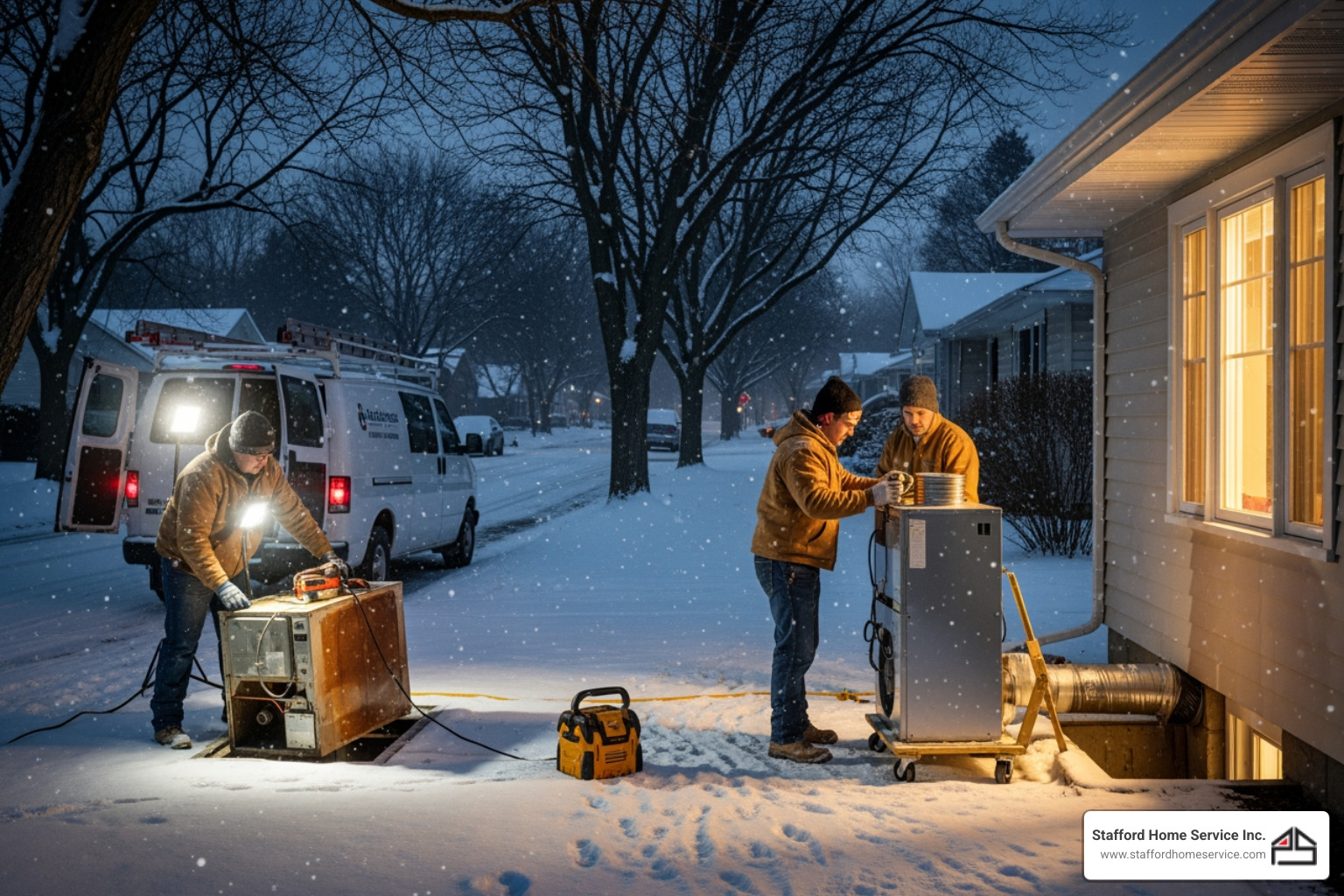
Best heating replacement in Minneapolis, MN starts with understanding your home's unique comfort needs and Minnesota's harsh winter climate. When temperatures plummet below zero and your furnace struggles to keep up, the question isn't whether you need a new system-it's how to choose the right one and who to trust with the installation. Minneapolis homeowners face a critical decision when their heating system shows signs of failure: repair one more time or invest in a reliable, efficient replacement that will protect your family through decades of Minnesota winters.
Quick Answer: Top Considerations for Heating Replacement
- System Age: Furnaces 15+ years old, heat pumps 10+ years
- Efficiency: Look for high AFUE ratings (90%+) for long-term savings
- System Type: Gas furnaces, electric heat pumps, or dual-fuel systems
- Professional Installation: Licensed, insured contractors with proven track records
- Cold-Climate Performance: Systems rated for subzero Minnesota temperatures
Upgrading your heating system is one of the most important investments you'll make in your home's comfort and efficiency. Whether you're experiencing frequent breakdowns, rising energy bills, or uneven heating throughout your home, choosing the right replacement system and qualified contractor makes all the difference. For comprehensive heating solutions custom to Minneapolis homes, explore professional heating services, and when you're ready to move forward, schedule your free consultation.
Signs Your Home Needs a Heating Replacement
Recognizing when your heating system is on its last legs can save you from a mid-January emergency. In the Twin Cities, a functioning heater isn't just a luxury; it’s a safety requirement. While some issues can be solved with a simple repair, others are clear indicators that it's time to look for the best heating replacement in Minneapolis, MN.
System Age and Frequent Repairs
Most modern furnaces are designed to work properly for 15 to 30 years, while heat pumps typically last between 12 and 20 years. However, in our climate, systems often start showing their age around the 10-to-15-year mark. If you find yourself calling for repairs every season, you’re likely throwing good money after bad. A general rule of thumb we often share: if a repair costs more than 50% of the price of a new system, replacement is the smarter investment.
Uneven Heating and Unusual Noises
Have you noticed that the living room is a sauna while the bedrooms feel like an icebox? This lack of temperature balance often means your system can no longer push air effectively through your ductwork. Furthermore, your heater should not sound like a percussion ensemble. If you hear booms, bangs, clicking, rattling, or a high-pitched shrieking, these are symptoms of mechanical failure. For instance, a "bang" might be delayed ignition, while "shrieking" often points to a failing motor belt.
Rising Energy Bills
If your heating habits haven't changed but your utility bills are skyrocketing, your system's efficiency is likely plummeting. Older units have to work much harder and run longer cycles to reach the temperature set on your thermostat. Upgrading to a modern, high-efficiency unit can significantly lower these monthly costs. You can find more detailed info about heating services to help you decide if your bills warrant a new installation.
Indicators of System Decline
Beyond the obvious mechanical failures, there are subtle "silent" signs that your system is declining. These can impact both your wallet and your health.
- Yellow Pilot Light: On a gas furnace, the pilot light (or burner flame) should always be a crisp blue. A yellow or flickering flame is a warning sign that the fuel isn't burning completely, which could mean your system is producing carbon monoxide. This is a serious safety hazard that requires immediate attention.
- Persistent Cycling: If your heater turns on and off every few minutes, it’s "short-cycling." This puts immense strain on the components and prevents your home from ever reaching a consistent temperature.
- Poor Air Quality: Older systems often struggle to filter out dust, dander, and allergens. If you notice more dust on your furniture or family members are experiencing increased respiratory issues, your old furnace might be the culprit.
- Visible Damage: Look for rust, cracks, or corrosion around the unit. If you see leaks of water, oil, or refrigerant, the system's structural integrity is compromised. For more signs of a failing furnace, it's always best to consult with local professionals who understand the specific stresses of the Minnesota environment.
Comparing the Best Heating Replacement in Minneapolis, MN
Choosing the right type of system is the most critical part of the replacement process. Minneapolis residents have several options, each with its own set of pros and cons depending on the home’s layout and fuel availability.
System TypeFuel SourceBest ForTypical LifespanGas FurnaceNatural Gas / PropaneMost MN homes; extreme cold15–25 YearsElectric Heat PumpElectricityEnergy efficiency; moderate cold12–15 YearsBoiler SystemGas / ElectricHomes with radiators or in-floor heat20–35 YearsDual-Fuel SystemGas + ElectricMaximum efficiency + backup power20–25 Years
Gas Furnaces
Natural gas is the most common heating fuel in Minneapolis. Modern gas furnaces are incredibly reliable and can reach AFUE (Annual Fuel Utilization Efficiency) ratings of up to 98%. This means 98 cents of every dollar you spend on gas goes directly into heating your home, with only 2 cents lost through venting.
Electric Heat Pumps
While heat pumps were once thought to be only for southern climates, modern "cold-climate" heat pumps use advanced inverter technology to extract heat from the air even when it's below zero outside. They are highly efficient because they move heat rather than create it. However, because they work so hard during our subzero stretches, they may have a slightly shorter service life than a furnace.
Boiler Systems
Many of the beautiful historic homes in Minneapolis and St. Paul rely on boilers. These systems circulate hot water or steam through radiators or baseboard heaters. They provide a very "comfortable" heat that doesn't dry out the air as much as forced-air systems.
Dual-Fuel Options
This is often considered the "gold standard" for our region. A dual-fuel system pairs an electric heat pump with a gas furnace. The heat pump handles the heating during the chilly autumn and spring days, and the gas furnace automatically kicks in when the temperature drops into the deep freeze. This ensures you always have the most cost-effective and reliable heat source active. All of these options should meet BBB verified heating standards to ensure you are getting a quality product.
Choosing the Best Heating Replacement in Minneapolis, MN for Your Home
Selecting the best heating replacement in Minneapolis, MN isn't as simple as picking the biggest unit on the shelf. In fact, an oversized unit is just as bad as an undersized one.
- Load Calculation: We use what’s called a "Manual J" calculation. This looks at your home’s square footage, insulation levels, window types, and even which way your house faces to determine the exact BTU (British Thermal Unit) capacity you need.
- Fuel Availability: Does your neighborhood have natural gas lines? If not, you may be looking at an electric furnace, a heat pump, or a propane-powered system.
- Square Footage: A larger home requires a higher-capacity system, but the layout also matters. A multi-story home might benefit from a zoned system or a ductless mini-split to ensure the upper levels stay warm.
- Climate Compatibility: In Minnesota, we need systems that can handle -20°F. We always recommend units specifically engineered for northern climates.
Benefits of High-Efficiency Systems
Upgrading to a high-efficiency system offers more than just lower bills.
- AFUE Ratings: Moving from an old 70% AFUE furnace to a 96% model can save you hundreds of dollars every winter.
- Energy Conservation: Higher efficiency means a reduced carbon footprint, which is better for the environment and helps meet local sustainability goals.
- Improved Airflow: Modern systems often feature variable-speed blowers. Instead of being "all on" or "all off," they can run at lower speeds to maintain a steady temperature and keep air moving through your filters more consistently.
- Quiet Operation: New units are designed with sound-dampening cabinets and advanced burners that operate much more quietly than the "jet engine" sounds of 20-year-old units. Explore our high-efficiency heating options to see how these benefits can transform your home.
The Professional Installation Process
Once you’ve selected your system, the installation is what determines how well it will actually perform. A high-end furnace installed poorly will never reach its rated efficiency and will likely break down prematurely.
The Step-by-Step Approach
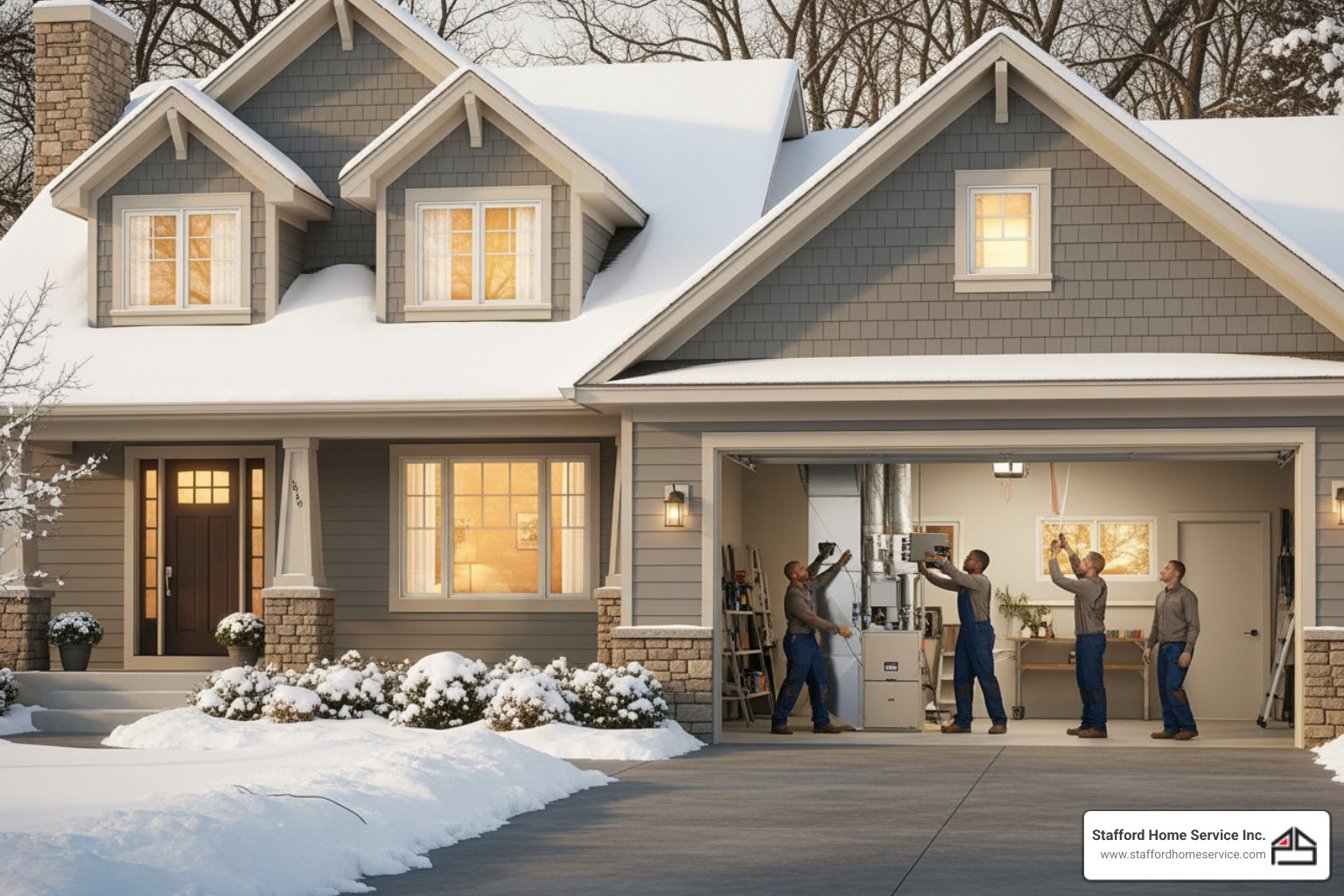
We take a meticulous approach to every installation to ensure your home remains a sanctuary of warmth.
- Home Assessment: We don't just look at the old unit; we inspect your ductwork for leaks and ensure your venting is up to modern safety codes.
- System Sizing: Using the load calculations mentioned earlier, we select the perfect unit for your specific structure.
- Precision Mounting: We ensure the unit is level and vibration-isolated to prevent noise from traveling through your floorboards.
- Safety Testing: This is the most important step. We check for gas leaks, test the venting for proper "draft," and calibrate the thermostat to ensure the system cycles correctly.
- Ductwork Inspection: If your old ducts are leaky, you’re losing heat to your attic or crawlspace. We seal and insulate where necessary to maximize your investment. You can find a more detailed professional installation guide to understand the technical requirements.
Questions for Your Best Heating Replacement in Minneapolis, MN Contractor
Before you sign a contract, you should feel 100% confident in your choice of professional. Here are the questions we recommend asking:
- Are you licensed, bonded, and insured? This protects you from liability and ensures the contractor meets state standards.
- What is the warranty coverage? Look for both manufacturer warranties on parts and labor warranties from the contractor.
- Do you offer maintenance plans? Routine service is the only way to keep your warranty valid.
- How much experience do your technicians have? You want a team that has seen every type of Minneapolis home, from 1920s bungalows to modern builds.
- Can you provide verified reviews? Check verified contractor reviews to see what your neighbors are saying about their experiences.
Maximizing Your System Lifespan and Efficiency
A new heating system is a significant investment, and like a new car, it requires regular maintenance to stay in peak condition. In Minneapolis, where our systems work overtime for six months of the year, maintenance is non-negotiable.
The Maintenance Checklist
- Annual Tune-Ups: We recommend a professional inspection every autumn before the first frost. This includes cleaning the burners, checking the heat exchanger for cracks, and calibrating the sensors.
- Filter Replacement: This is the single most important thing a homeowner can do. Check your filter every 30 days. A clogged filter restricts airflow, making your blower motor work harder and eventually burn out.
- Thermostat Calibration: Ensure your thermostat is reading the temperature accurately. Upgrading to a smart thermostat can automate this process and even provide alerts if your system is behaving strangely.
- Humidity Control: Minnesota winters are notoriously dry. Adding a whole-home humidifier can make 68°F feel like 72°F, allowing you to lower the thermostat without losing comfort.
- Clear the Area: Keep the area around your furnace clear of clutter. This ensures proper airflow and prevents fire hazards.
Our maintenance savings plans are designed to take the guesswork out of this process, providing you with peace of mind and priority service.
Incentives and Rebates for Minneapolis Residents
The good news for local homeowners is that there has never been a better time to upgrade. There are numerous ways to offset the initial investment:
- Federal Tax Credits: Under the Inflation Reduction Act, homeowners can often claim a significant percentage of the cost of high-efficiency heat pumps and furnaces on their federal taxes.
- Utility Rebates: Local providers like Xcel Energy and CenterPoint Energy offer substantial rebates for installing ENERGY STAR® certified equipment. In some cases, these can total over $1,000 in savings.
- Manufacturer Incentives: We often have access to seasonal promotions from top brands like Daikin.
- Financing Options: We offer flexible financing to help you get the system you need today without breaking the bank.
Frequently Asked Questions about Heating Replacement
How long does a typical heating system last in Minnesota?
In our region, the lifespan of a system is heavily influenced by how hard it has to work.
- Gas Furnaces: Typically 15 to 25 years. If well-maintained, some can reach 30 years, but efficiency usually drops significantly after year 20.
- Heat Pumps: Generally 12 to 15 years. Because they provide both heating and cooling, they run year-round, which leads to faster wear and tear than a furnace.
- Boilers: These are the marathon runners of the HVAC world, often lasting 25 to 35 years due to their simple mechanical design.For more lifespan statistics, annual maintenance can add 5+ years to any of these numbers.
What is the difference between a furnace and a heat pump?
The primary difference is how they generate heat. A furnace uses fuel combustion (burning gas) to create heat. A heat pump uses electricity and refrigerant to "pump" heat from the outside air into your home. Think of a heat pump as an air conditioner running in reverse. While furnaces are better for extreme subzero temperatures, heat pumps are far more efficient during the "shoulder seasons" of spring and fall. Hybrid configurations give you the best of both worlds.
When is the best time of year to replace a heating system?
The "off-season"—typically spring and early autumn—is the ideal time.
- Scheduling: Technician availability is usually higher, meaning you can get an appointment that fits your schedule.
- Emergency Prevention: You don't want to be forced into a replacement decision when your furnace dies on a Friday night in January.
- Better Deals: Many manufacturers and installers offer "shoulder season" discounts to keep their crews busy during the slower months.
Conclusion
At Stafford Heating, Cooling, Plumbing & Electrical, we understand that choosing the best heating replacement in Minneapolis, MN is about more than just hardware—it’s about the peace of mind that comes with knowing your home will stay warm no matter what the Minnesota sky throws at it. Our commitment to quality workmanship and complete customer satisfaction is at the heart of everything we do.
As experienced owners, we stand behind every installation with the Daikin Comfort Promise, ensuring that if you aren't satisfied, we will make it right. From the initial load calculation to the final safety test, we treat your home with the respect it deserves. Don't wait for a breakdown to leave you in the cold. Upgrade your heating today and experience the difference that professional, local expertise makes. We are proud to serve the entire Twin Cities metro, ensuring every neighbor stays cozy all winter long.
Customer Testimonials
Our customers consistently praise our knowledgeable technicians, prompt service, and the lasting quality of the work we deliver.