Minneapolis Heating Crisis? Find Same-Day Tune-Up Solutions Now!
Why Minneapolis Homeowners Can't Afford to Wait on Heating Problems
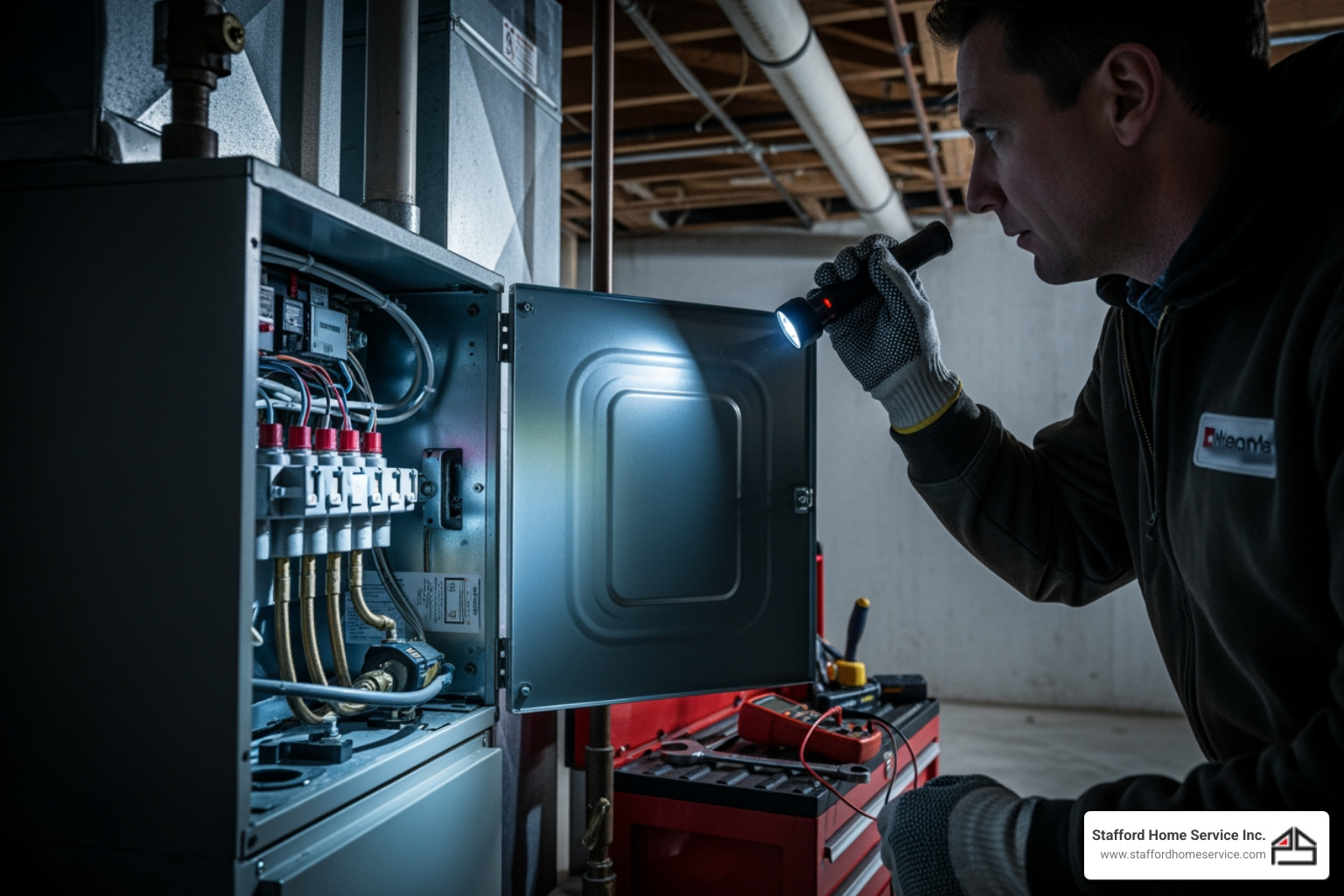
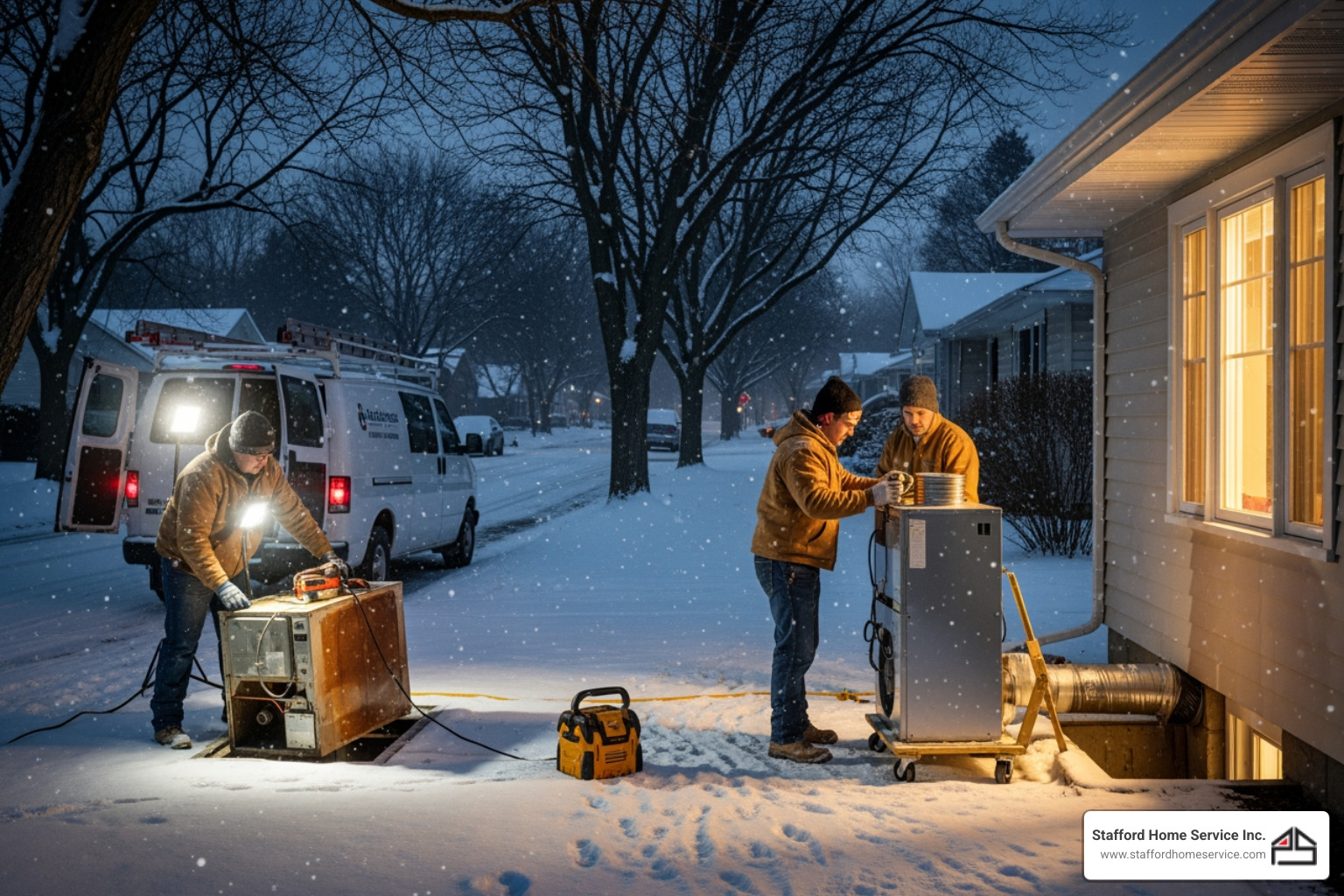
When your furnace starts acting up during a Minnesota cold snap, an emergency heating tune-up in Minneapolis, MN can mean the difference between staying warm and facing a dangerous breakdown. Minneapolis winters push heating systems to their limits, with furnaces running 12-16 hours a day during January's sub-zero stretches. That kind of strain reveals weak spots fast—and when temperatures plunge below zero for weeks at a time, there's no room for delay.
Quick Answer: What You Need to Know About Emergency Heating Tune-Ups
- 24/7 availability, including nights, weekends, and holidays
- Same-day, priority scheduling for no-heat calls
- Comprehensive safety and performance checks on your existing system and connected safety devices
- On-the-spot repairs for many common furnace issues
- Preventative care that helps reduce the chance of full system failure
If your furnace is making strange noises, blowing cold air, or won't turn on at all, you need professional help right away. Learn more about heating and cooling services in Minneapolis, or schedule your emergency tune-up now.
The reality is simple: Minneapolis furnaces work nearly twice as hard as those in milder climates. Even a 5-10% efficiency drop can spike your heating bills, and worn components can create carbon monoxide risks or leave you without heat when you need it most. Recognizing the warning signs early and knowing what to expect from an emergency tune-up can protect your family's comfort and safety all winter long.
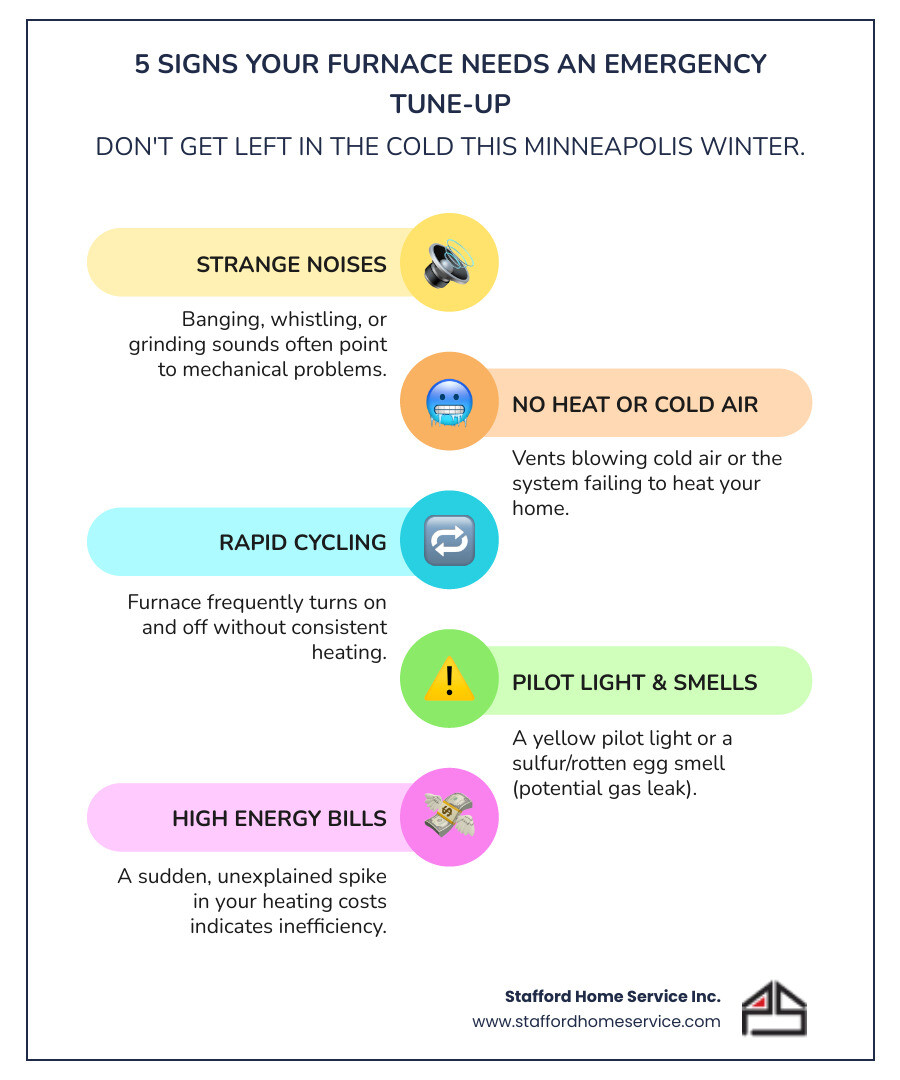
7 Warning Signs Your Furnace Needs an Emergency Tune-Up
When the mercury drops in Minneapolis, our furnaces become the unsung heroes of our homes. But even heroes show signs of distress. Ignoring these signals can turn a minor issue into a major emergency, leaving your family in the cold. It's crucial for Minneapolis homeowners to recognize these indicators early to prevent system failure and ensure comfort.
Here are the top warning signs that your furnace is crying out for an emergency heating tune-up in Minneapolis, MN:
Strange Noises or Smells
Your furnace should operate with a relatively quiet hum. If you start hearing unusual sounds like banging, whistling, grinding, or screeching, it's a clear sign something is amiss. Banging can indicate issues with the ductwork expanding and contracting too quickly, or even a problem with the burner. Whistling might point to airflow restrictions, while grinding or screeching often signals a failing motor or worn-out bearings. These mechanical noises indicate components are struggling or failing, and could lead to a complete breakdown if not addressed.
Even more concerning are strange smells. While a slight burning dust smell is normal when you first turn on your furnace for the season, a persistent or strong odor is not. A sour or sulfur-like smell can indicate a gas leak, which is extremely dangerous. If you detect a gas smell, leave your home immediately and call 911 from a safe location. Do not use any electrical switches or phones inside the house. Other unusual smells might suggest overheating electrical components or a clogged burner, both of which require immediate professional attention to prevent fire hazards. Our team is equipped to handle these serious concerns. You can find more info about gas leak services on our website.
Inconsistent Heating or No Heat
Is your furnace blowing cold air, or are some rooms in your home freezing while others are toasty? Inconsistent heating, cold spots, or the furnace blowing cool air from the vents are frustrating and uncomfortable issues. This often points to problems with airflow, such as dirty filters, blocked vents, or issues with the blower motor. If your furnace simply won't turn on at all, that's the clearest sign of an emergency. This could be due to a faulty igniter, a tripped circuit breaker, or a problem with the gas supply. Whatever the cause, a furnace that can't deliver heat in our Minneapolis winters is a critical situation. Efficient airflow is key to even heating and comfort. For more on improving your home's air circulation, check out more info about air exchangers.
Thermostat and Cycling Issues
Your thermostat is the brain of your heating system. If it's acting up, your furnace will too. Common thermostat issues include incorrect temperature readings, unresponsive controls, or a complete malfunction. Another red flag is short cycling, where your furnace turns on and off frequently without completing a full heating cycle. This puts immense strain on the system, wastes energy, and often indicates a problem with the thermostat calibration, a clogged filter, or even an oversized furnace. Conversely, if your furnace runs constantly without shutting off, it could be struggling to reach the set temperature, perhaps due to a faulty thermostat, a dirty filter, or a larger system problem. Understanding your thermostat's role is crucial for efficient heating. Learn more info about thermostats and how they control your home's comfort.
Poor Air Quality and Pilot Light Problems
Your heating system plays a significant role in your home's indoor air quality. If you notice an increase in dust, unusually dry air, or a general stuffiness, your furnace might be contributing to the problem. A dirty system can circulate allergens and pollutants, impacting your family's health and comfort.
For furnaces with a pilot light, its appearance is a critical indicator. A healthy pilot light should be a strong, steady blue flame. If you see a yellow or orange pilot light, it indicates incomplete combustion, which can produce dangerous carbon monoxide. If the pilot light frequently goes out or won't stay lit, you could have a problem with the thermocouple or the gas supply. Modern furnaces often use electronic igniters instead of pilot lights, and issues with these can also lead to ignition failure. Ensuring clean air and proper combustion are vital for a healthy home. Find more info about air cleaners and how they can improve your indoor environment.
What to Expect from an Emergency Heating Tune-Up in Minneapolis, MN
When your furnace fails during a frigid Minneapolis winter, you need more than just a repair; you need a rapid solution and peace of mind. That's exactly what you can expect from our emergency heating tune-up in Minneapolis, MN. We understand that heating emergencies don't stick to business hours, which is why we offer 24/7 availability, including weekends and holidays. Our priority is to get a licensed technician to your door as quickly as possible to diagnose and resolve your heating crisis.
The Difference Between Standard and Emergency Tune-Ups
While both standard and emergency tune-ups aim to keep your heating system running optimally, their primary drivers and response times differ significantly. A standard tune-up is a proactive, preventative measure, ideally scheduled in the fall before the heating season begins. It's about maintaining efficiency, extending lifespan, and catching minor issues before they become major problems.
An emergency heating tune-up, however, is a reactive service. It's called for when your furnace has already failed or is showing critical signs of imminent breakdown, threatening your home's comfort and safety. The key distinctions are:
- Urgency: Emergency services are dispatched immediately, often with same-day service, regardless of the time or day.
- Immediate Diagnostics: The focus is on quickly identifying the root cause of the current failure.
- Prioritized Dispatch: Emergency calls receive top priority over routine appointments.
- After-hours/Weekend/Holiday Service: We're available when others aren't, because your comfort can't wait.
Our goal is to restore your heat as swiftly and efficiently as possible, ensuring your family isn't left in the cold.
Key Services Included in an Emergency Call
When our licensed technicians arrive for an emergency heating tune-up in Minneapolis, MN, they're prepared to perform a comprehensive assessment to get your system back online. While the exact steps may vary depending on your furnace's specific issue, typical services include:
- Thorough Safety Inspection: We carefully check for any potential hazards, including carbon monoxide leaks, gas leaks, and fire risks.
- Carbon Monoxide Check: This is a critical step, especially with older systems or furnaces running under strain, to ensure no deadly CO gas is entering your home.
- Ignition System Repair: We'll diagnose and repair issues with pilot lights, igniters, or thermocouples that prevent your furnace from starting.
- Blower Motor Check and Repair: Ensuring the blower motor is functioning correctly is vital for proper heat distribution. We'll inspect for wear, lubricate, or replace as needed.
- Electrical Connection Tightening and Inspection: Loose or faulty electrical connections can cause intermittent operation or complete system failure. We'll secure and test all wiring.
- Filter Inspection and Replacement: A clogged filter can severely restrict airflow and cause your furnace to overheat or work inefficiently. We'll check and replace it if necessary.
- Thermostat Diagnostics: We'll test your thermostat's functionality and calibration to ensure it's accurately communicating with your furnace.
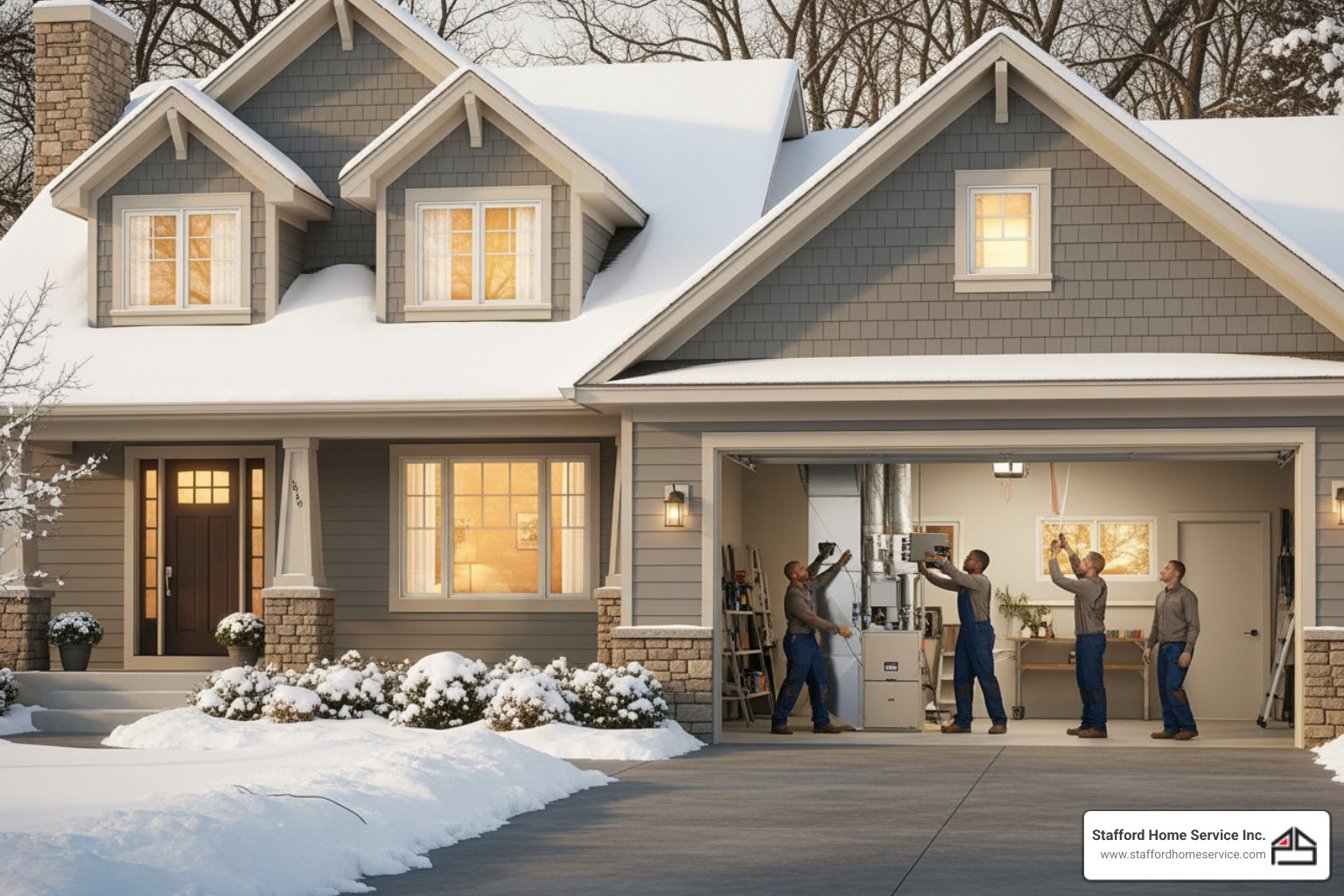
Our technicians arrive with fully stocked trucks, allowing them to make most repairs on the spot. Your family's safety is our top priority, and we also offer more info about smoke detectors and carbon monoxide detectors to help you stay vigilant.
What to Do While Waiting for the Technician
A furnace breakdown can be stressful, but there are a few things you can do to help the situation while you await our arrival:
- Check Thermostat Settings: Ensure your thermostat is set to "heat" and the temperature is higher than the current room temperature. Check if the batteries need replacing.
- Check Circuit Breaker: Go to your home's electrical panel and check if the circuit breaker for your furnace has tripped. If it has, reset it once. If it trips again immediately, do not reset it and wait for our technician.
- Ensure Vents Are Clear: Make sure all heating vents in your home are open and not blocked by furniture, rugs, or drapes. Clear any snow or debris from outdoor furnace vents if applicable.
- Gas Leak Protocol: If you smell gas, immediately evacuate your home, move to a safe distance, and call 911 and your gas utility company. Do NOT attempt to troubleshoot or use any electrical devices inside your home.
- Safety Precautions: Avoid tampering with the furnace. If you're unsure about any step, it's best to wait for a professional to prevent further damage or injury.
These simple checks can sometimes resolve minor issues or help our technicians diagnose the problem more quickly upon arrival.
The Risks of Neglecting Your Furnace in a Minneapolis Winter
In Minneapolis, winter isn't just a season; it's a force of nature. Our average winter temperature hovers in the teens, with frequent dips below zero. These extreme conditions mean our furnaces are under immense pressure, running for 12-16 hours a day in January. Compared to milder climates, a Minneapolis furnace can log nearly double the runtime hours in a single heating season, putting an immense toll on burners, motors, and safety components. Neglecting your furnace in this environment isn't just inconvenient; it's a serious gamble with your family's safety and comfort.
Safety Hazards and Home Damage
The most severe consequence of a neglected furnace is the potential for safety hazards. A malfunctioning furnace can pose several grave risks:
- Carbon Monoxide Leaks: A cracked heat exchanger or improper ventilation can allow carbon monoxide (CO), a colorless, odorless, and deadly gas, to leak into your home. The long runtime hours of Minneapolis furnaces increase the risk of heat exchanger cracks, making annual safety checks vital.
- Fire Risk: Overheating components, faulty wiring, or clogged burners can ignite, leading to a house fire.
- Gas Leaks: Issues with gas lines or furnace components can lead to dangerous gas leaks, which can be explosive and cause severe health problems.
- Frozen Pipes: Perhaps one of the most common and costly consequences of a furnace breakdown in sub-zero temperatures is frozen and bursting pipes. Without adequate heat, water in your pipes can freeze, expand, and rupture, leading to extensive water damage, structural issues, and expensive repairs. While we typically focus on heating, it's worth noting that a reliable power source, such as a generator, can keep your heating running during outages, preventing such disasters. Learn more info about generator installation for peace of mind.
Reduced Efficiency and Comfort
Beyond safety, a neglected furnace will directly impact your wallet and your daily comfort.
- Higher Energy Bills: As components wear down and the system becomes less efficient, your furnace has to work harder to maintain your desired temperature. This translates directly into higher energy consumption and significantly increased monthly heating bills. Even a modest 5-10% efficiency gain from a tune-up can lead to meaningful savings on bills, especially given that Minnesota households spend a significant portion of their winter budgets on heating.
- Inconsistent Temperatures: You'll experience cold spots and uneven heating throughout your home, forcing you to constantly adjust the thermostat and never quite feeling comfortable.
- Poor Indoor Air Quality: A dirty or poorly maintained furnace can circulate dust, allergens, and other pollutants, exacerbating respiratory issues and reducing overall indoor air quality. Maintaining optimal humidity levels can also impact comfort and air quality. Explore more info about humidifiers to improve your home's environment.
- Increased Wear and Tear: A struggling furnace's components will wear out faster, leading to more frequent and costly repairs, and ultimately shortening the overall lifespan of your heating system.
How to Prevent Future Heating Emergencies
While an emergency heating tune-up in Minneapolis, MN is a crucial service for immediate relief, the best defense against winter breakdowns is a strong offense. Taking a proactive approach to your furnace's health ensures long-term reliability, system longevity, and consistent comfort for your family.
The Importance of Annual Preventative Maintenance
Think of preventative maintenance as your furnace's annual physical. Just like you visit the doctor for a check-up, your furnace needs a professional inspection to stay in top shape. We strongly recommend scheduling an annual furnace tune-up, ideally in the fall before the heating season kicks into high gear. This allows us to:
- Catch Problems Early: Minor issues like a worn belt, a dirty flame sensor, or a loose electrical connection can be identified and addressed before they escalate into major, costly breakdowns.
- Extend System Lifespan: Regular care reduces wear and tear, helping your furnace or boiler last its full expected lifespan (15-25 years for furnaces/boilers, 10-15 years for heat pumps).
- Improve Efficiency: A clean, calibrated system runs more efficiently, translating into lower energy bills throughout the long Minneapolis winter.
- Maintain Warranty: Many manufacturers require annual professional maintenance to keep your furnace's warranty valid. Skipping this step could void your coverage, leaving you responsible for expensive repairs.
Consider enrolling in a service agreement for hassle-free, regularly scheduled maintenance. You can find more info about service agreement services on our website.
Simple Homeowner Checks
Beyond professional tune-ups, there are several easy checks you can perform regularly to help maintain your furnace's health:
- Regularly Changing Air Filters: A dirty air filter is one of the most common causes of furnace problems, restricting airflow and making your system work harder. Check your filter monthly and replace it every 1-3 months, or more often if you have pets or allergies.
- Keeping Vents Clear: Ensure all supply and return air vents throughout your home are open and free from obstructions like furniture, rugs, or drapes.
- Monitoring Thermostat Performance: Pay attention to how your thermostat is functioning. If it seems inaccurate or unresponsive, it might need new batteries or professional calibration.
- Checking for Drafts: Seal any drafts around windows and doors. This helps your furnace maintain a consistent temperature more easily, reducing strain and energy waste.
Finding a Reputable HVAC Company for your emergency heating tune-up in Minneapolis, MN
When it comes to something as critical as your home's heating, choosing the right HVAC company is paramount. For an emergency heating tune-up in Minneapolis, MN, you need a team you can trust. Look for companies that:
- Employ Licensed Technicians: Ensure the professionals working on your system are fully licensed and certified.
- Are NATE-Certified: NATE (North American Technician Excellence) certification indicates a high level of expertise and training in HVAC services.
- Have Positive Reviews and Local Expertise: Check online reviews and testimonials. A company with deep roots in the Minneapolis area will understand the unique challenges our climate poses to heating systems.
- Offer 24/7 Availability: For emergencies, round-the-clock service is non-negotiable.
Our commitment is to quality workmanship, complete customer satisfaction, and reliable service. We pride ourselves on our experienced owners and staff, and our dedication to the Daikin Comfort Promise, ensuring you receive the best possible care. For all your heating and cooling needs, we're here to help. Find more info about heating and cooling services we provide across the Twin Cities.
Frequently Asked Questions about Emergency Heating Services
When you're facing a heating emergency in the heart of a Minneapolis winter, you likely have many questions. Here are some of the most common inquiries we receive:
How quickly can a technician arrive for an emergency heating tune-up in Minneapolis, MN?
When you call us for an emergency heating tune-up in Minneapolis, MN, speed is our priority. We offer 24/7 service, which means we have technicians available day and night, including weekends and holidays. Our dispatch system prioritizes emergency calls, aiming for same-day service to minimize your downtime and restore heat to your home as quickly as possible. We understand that in sub-zero temperatures, every hour without heat counts, and we strive to provide immediate, round-the-clock technician access to ensure your family's comfort and safety.
Can an old furnace still benefit from a tune-up?
Absolutely! While newer, high-efficiency models certainly benefit, older furnaces, including mid-efficiency models common in many Minneapolis homes, can significantly benefit from an emergency heating tune-up in Minneapolis, MN, or even a standard annual tune-up. Regular maintenance helps extend the lifespan of these systems, ensuring they run safely and as efficiently as possible until you're ready for a replacement. Tune-ups can identify worn parts before they fail, improve performance, and ensure critical safety checks are performed, especially for components like heat exchangers. Furnaces and boilers, with proper care, can last 15 to 25 years. For homes with boiler systems, regular maintenance is equally important to ensure optimal function and longevity. Learn more info about boilers and their maintenance.
Does a tune-up help lower my heating bills?
Yes, a tune-up can absolutely help lower your heating bills! A clean, well-maintained, and calibrated furnace runs more efficiently. Over time, dust and grime accumulate, components wear, and settings can drift, forcing your furnace to work harder and consume more energy to heat your home. An emergency heating tune-up in Minneapolis, MN or a regular preventative tune-up addresses these issues, ensuring your system operates at peak efficiency. This reduced energy usage directly translates into meaningful savings on your monthly bills, especially given how much Minnesota households spend on heating during our long winter season. Even a modest 5-10% efficiency gain can add up significantly over our long heating season. While SEER ratings are typically associated with air conditioning efficiency, the principle of optimizing system performance to reduce energy consumption applies across all HVAC systems. You can explore our more info about the seer calculator for context on energy efficiency.
Stay Warm and Safe with Professional Heating Support
Minneapolis winters are legendary for their intensity, demanding unwavering reliability from our home heating systems. When your furnace falters, an emergency heating tune-up in Minneapolis, MN isn't just a convenience; it's a necessity for your family's safety and comfort. We understand the critical role your heating system plays, and we're dedicated to providing the prompt, expert service you need.
By recognizing the warning signs, understanding what to expect from emergency services, and committing to proactive maintenance, you can steer the coldest months with confidence. Our team at Stafford Heating, Cooling, Plumbing & Electrical is here for you, offering quality workmanship, complete customer satisfaction, and experienced service backed by our commitment to your comfort. Don't let a heating crisis catch you off guard. Take prompt action and trust us to keep your home warm and safe. For immediate assistance or to learn more about our comprehensive heating solutions, visit our more info about furnace repair services.
Customer Testimonials
Our customers consistently praise our knowledgeable technicians, prompt service, and the lasting quality of the work we deliver.